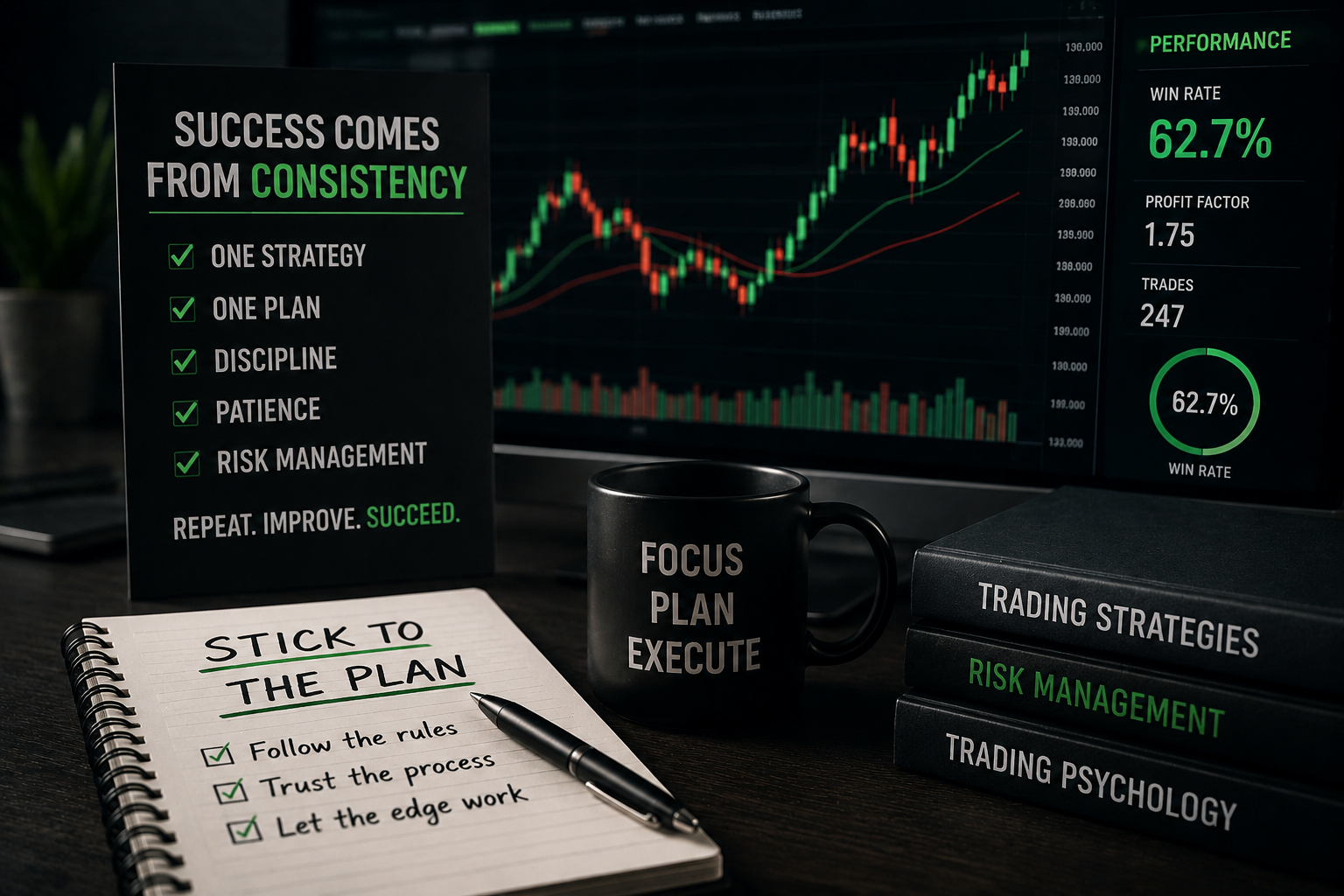
If You Stick to One Strategy — Why Your Win Rate Can Exceed 60%
Many traders constantly switch strategies.
Today — price action.
Tomorrow — indicators.
Next week — something new from YouTube.
And then comes the question:
👉 “Why am I not consistent?”
The answer is often simple:
👉 Lack of consistency
1. The real problem is not the strategy
Most strategies work.
But:
👉 only if they are executed properly
When you keep switching:
- you never truly understand the system
- you don’t know when it works and when it doesn’t
- you have no real statistics
2. What happens when you stick to one strategy
When you use one strategy long enough:
✔ you start seeing patterns
✔ you understand when NOT to trade
✔ you build confidence
✔ you develop real statistics
👉 This is when results start improving
3. Where does the “60% win rate” come from?
Not from magic.
But from:
👉 repetition + discipline
If:
- the strategy has logic
- you follow the rules
- you manage risk properly
even an average strategy can produce consistent results.
4. The biggest mistake
Many traders do this:
- lose 2–3 trades
- start doubting the strategy
- switch to something new
👉 That’s why they never reach consistency
5. What does “sticking to a strategy” really mean?
It doesn’t mean trading blindly.
It means:
✔ following rules
✔ avoiding emotional decisions
✔ giving the strategy time
6. The role of risk management
Even with a 50–60% win rate:
👉 you can be profitable
If:
- your winners are bigger than your losses
- your risk is controlled
- you avoid impulsive position sizing
7. The real secret
It’s not the strategy.
It’s this:
👉 executing it the same way every time
That’s what most traders fail to do.
Conclusion
Success in trading doesn’t come from:
- the perfect strategy
- or a “secret indicator”
It comes from:
👉 discipline
👉 repetition
👉 consistency
When you stop jumping between systems and start building habits:
👉 results follow over time
This article is for educational purposes only and does not constitute financial advice. Each trader is responsible for their own decisions. Past performance does not guarantee future results.