


Here’s Why Institutions Move the Market

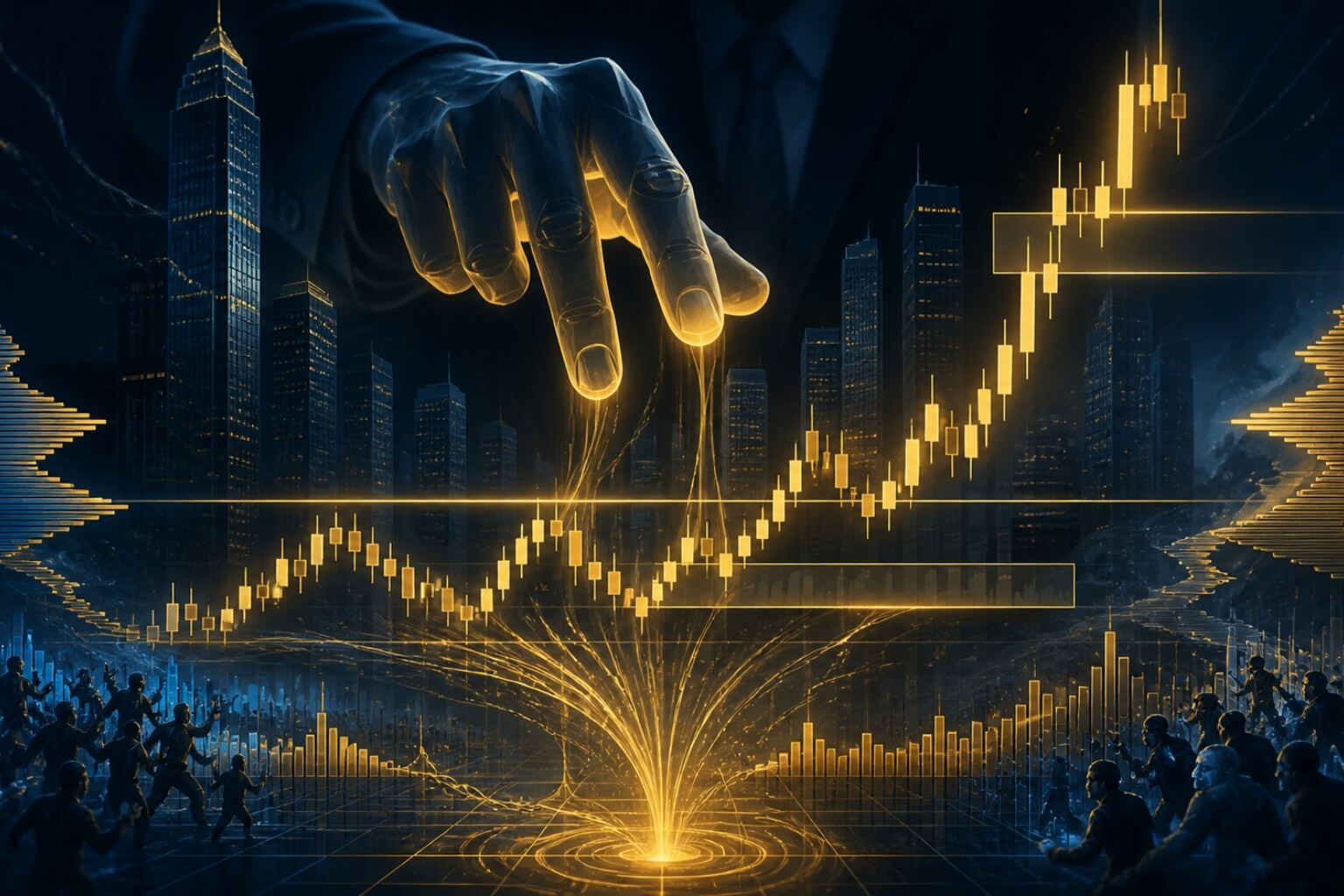
A lot of people enter crypto or trading with the idea that the market is driven mainly by news, emotions, and small traders buying and selling in panic. And to some extent, that is true. Yes, crowd psychology matters. Yes, news can accelerate a move. Yes, retail traders often enter too late and exit too early.
But if we are talking about the real movement of the market, the serious direction, the major impulses, and why certain levels are defended or broken exactly when they are, then we need to talk about institutions.
Because the reality is simple:
the market is not moved by the people watching it.
The market is moved by the people who can move liquidity.
And that is exactly why institutions play such a major role.
What “institutions” actually means
When people hear the word “institutions,” they often imagine something vague and distant. Some people in suits, banks, funds, big players. And overall, that is not wrong. This group includes hedge funds, investment funds, market makers, banks, large asset managers, family offices, and all kinds of participants operating with huge amounts of capital and not entering the market for a $200 profit.
These are not participants who are “just trying.”
These are not participants trading out of boredom.
These are not participants entering because of a post on Twitter.
These are participants with capital, a plan, access to information, patience, and most importantly — real market weight.
And when that kind of weight shifts, the chart feels it.
Price does not move because of opinion, but because of volume
This is one of the most important truths many people understand too late.
The market does not care what you think.
It does not care how convinced you are.
It does not care how many analyses you have watched.
Price moves when there is enough volume and enough aggression in one direction.
That is where institutions come in.
A small trader may have the right idea, but they cannot push the market. Thousands of small traders together can create noise, can create momentum, can accelerate a move that has already started. But the real foundation of many major moves comes when serious capital starts entering, exiting, accumulating, or distributing.
That is the difference between a wave and the tide.
Retail can make splashes.
Institutions change the water level.
Why institutions do not enter like retail
This is where another important point comes in.
Large players cannot just hit “buy” like an ordinary trader and be done with it. If you manage enormous capital, you cannot enter or exit all at once without moving the whole market against yourself. That is why institutional players usually work more slowly, more intelligently, and in stages.
They accumulate.
They distribute.
They wait for liquidity.
They use the weakness of the crowd.
And that is why you often see periods where the market seems to be doing nothing, but in reality a lot is happening beneath the surface. Consolidations, false breakouts, stop hunts, returns to the range, retests of levels. To the small participant, this looks chaotic. To institutional capital, it is often simply a process.
A process of entry.
A process of exit.
A process of preparation.
Liquidity is the real battlefield
Most people watch only price. More experienced traders also watch volume and structure. But institutions watch something else that is extremely important — liquidity.
Where are the stops?
Where are the trapped participants?
Where will the crowd react emotionally?
Where are there enough opposing orders for large capital to get filled?
That is the key.
Institutions do not care only whether an asset “looks good.” They care about where they can enter efficiently, where they can build a position, and where the market will give them the other side of the trade.
That is why we so often see moves that seem illogical at first glance. The market goes slightly above a local high, takes the liquidity, then reverses. Or it drops below an important support, sweeps the stops, and then sharply returns back up. For retail, that is “manipulation.” For institutions, that is access to liquidity.
And that is what moves the market far more often than people want to admit.
News is often just the excuse
This is an uncomfortable topic, but it matters.
Many times people see a move and immediately look for the news that caused it. And yes, sometimes there is a direct connection. But in many other cases, the news simply arrives at the right moment. Or more precisely — it gets used at the right moment.
The market is often prepared in advance.
And when large capital is already positioned, any piece of news can become a catalyst. Not because the news itself has magical power, but because the market was already ready to move. The news simply provides the story that everyone repeats afterward.
The crowd sees the headline.
Institutions see the opportunity.
And that is a huge difference.
Why retail is almost always late
This is not about intelligence. It is about position.
The small trader usually reacts.
The institution usually prepares.
Retail sees the strong green candle and decides that “it’s starting.” Institutional capital often started much earlier — in the boredom, in the range, in the moments when nobody was paying attention. Retail sees panic and sells. Institutions often look exactly there for zones where fear has created a good price.
That is why so many people feel like the market is always one step ahead of them.
Because in a way, it is.
They enter when the move is already visible.
Institutions often enter when the move still looks uninteresting.
Big moves require big capital
That does not mean retail has no significance at all. In the end, the market is the sum of all participants. But when we talk about a sustainable trend, a serious breakout, the defense of key zones, or prolonged accumulation of an asset, there is almost always serious capital behind it.
A big move does not live on enthusiasm alone.
It lives on execution.
On volume.
On consistency.
On the ability to defend direction.
And that is much harder to come from a chaotic crowd than from well-organized, patient, and heavily funded participants.
What this means for the average trader
This is where the most useful part begins.
If institutions move the market, that does not mean you have no chance. It does not mean you should feel powerless. It means you should stop looking at the market as a place where the winner is the one who reacts fastest to the news.
It is much more useful to start watching:
- where accumulation is happening
- where liquidity is sitting
- where false breakouts appear
- where price refuses to fall or rise despite obvious pressure
- where there is a structure suggesting the presence of a larger player
In other words — you do not need to be an institution to make money. But it is far better to learn how to recognize what institutions are likely doing, and not stand against them without a reason.
The market is not a democracy
This may be the best way to say it.
In the market, not every voice carries the same weight.
Yes, all participants see the same chart.
But not all participants bring the same force into it.
One enters with fear.
Another enters with a system.
A third enters with billions.
And once that reality is accepted, things start to appear that used to look random. Why certain levels matter so much. Why breakouts are sometimes false. Why consolidations can last so long. Why the market often punishes the crowd exactly when it feels most confident.
Because beneath the surface, not everyone is playing the same game.