

Here’s Where to Start If You’ve Never Traded Before

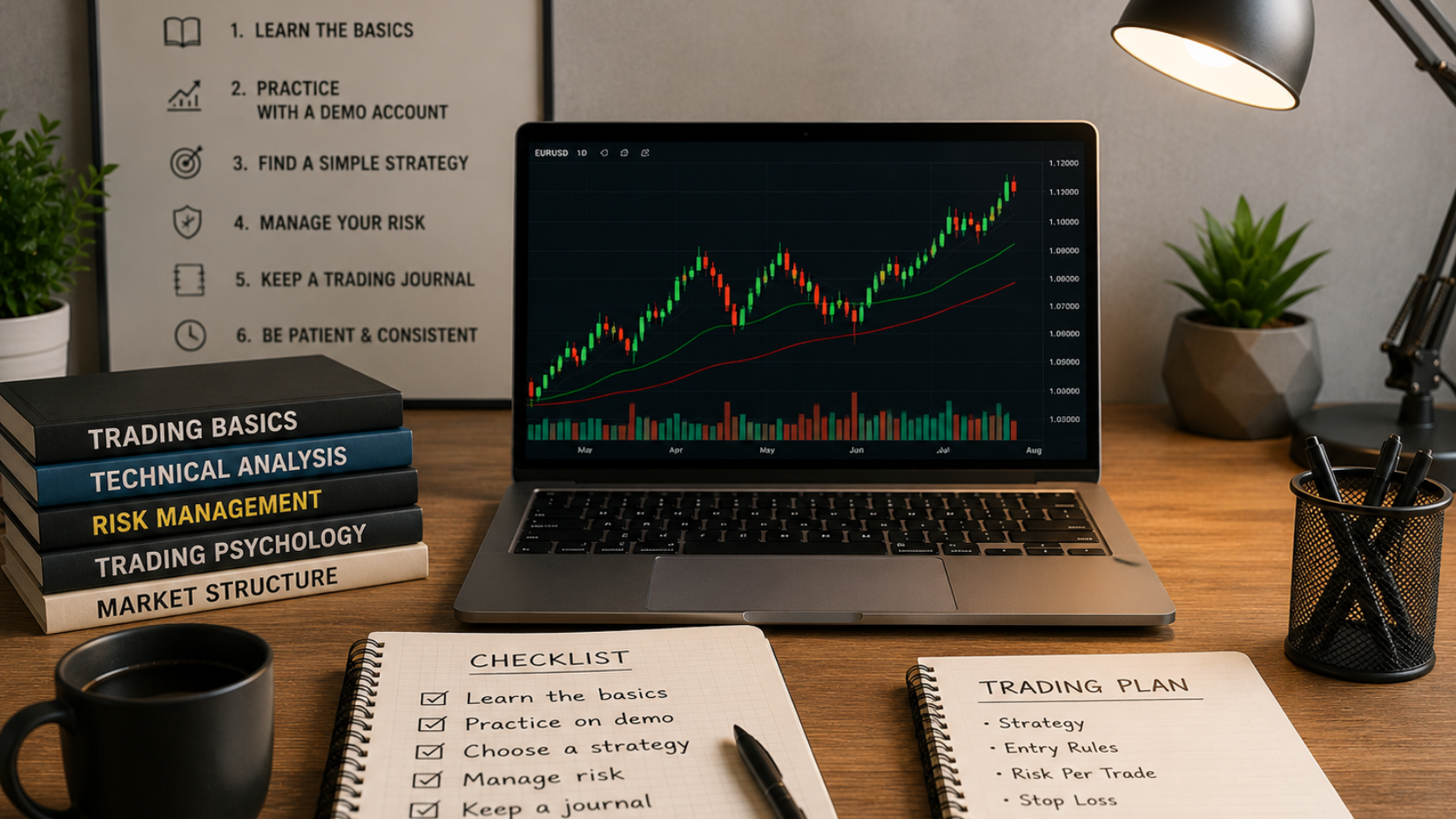
Trading can seem complicated at the beginning.
Charts, indicators, strategies…
And a lot of information everywhere.
👉 “Where do I even start?”
If you’ve never traded before — this article will give you a clear path.
1. Understand what trading actually is
First of all:
👉 trading is NOT a way to get rich quickly
It is:
- decision-making
- working with probabilities
- managing risk
You’re not trying to “predict the market.”
You’re trying to react correctly.
2. Learn the basics (without overcomplicating)
Start with the essentials:
✔ what a chart is
✔ what a trend is
✔ what support and resistance are
✔ how candlesticks work
👉 This is the foundation of everything
3. Choose a platform
The most popular choice:
👉 TradingView
There you can:
- view charts
- analyze
- practice
👉 Without risking money
4. DO NOT start with real money
This is critical.
Start with:
👉 a demo account
Why?
- you will make mistakes
- you will learn
- you will experiment
👉 Without financial risk
5. Choose one simple strategy
Don’t look for the “perfect” one.
Pick something basic:
- trading levels
- trend following
- price action
👉 Simple works best in the beginning
6. Learn risk management
This is the most important skill.
Basic rule:
👉 risk no more than 1–2% per trade
Why?
- you will survive losses
- you will control emotions
- you will stay in the game
7. Keep a journal
Every trader should track:
- entries
- exits
- reason for the trade
- result
👉 This is how you improve
8. Give yourself time
Trading is not learned in a week.
👉 think in months
Don’t rush for profits.
Focus on:
✔ the process
✔ discipline
✔ understanding
9. The biggest mistake
❌ jumping between strategies
❌ chasing quick results
❌ copying others without understanding
👉 This slows your progress
Conclusion
If you’re starting from zero:
👉 you don’t need complexity
You need:
- fundamentals
- one strategy
- risk control
- patience
👉 And consistency
That’s the path that works.
This article is for educational purposes only and does not constitute financial advice. Each trader is responsible for their own decisions. Past performance does not guarantee future results.