


Approaching Trading Like You’re Learning to Drive

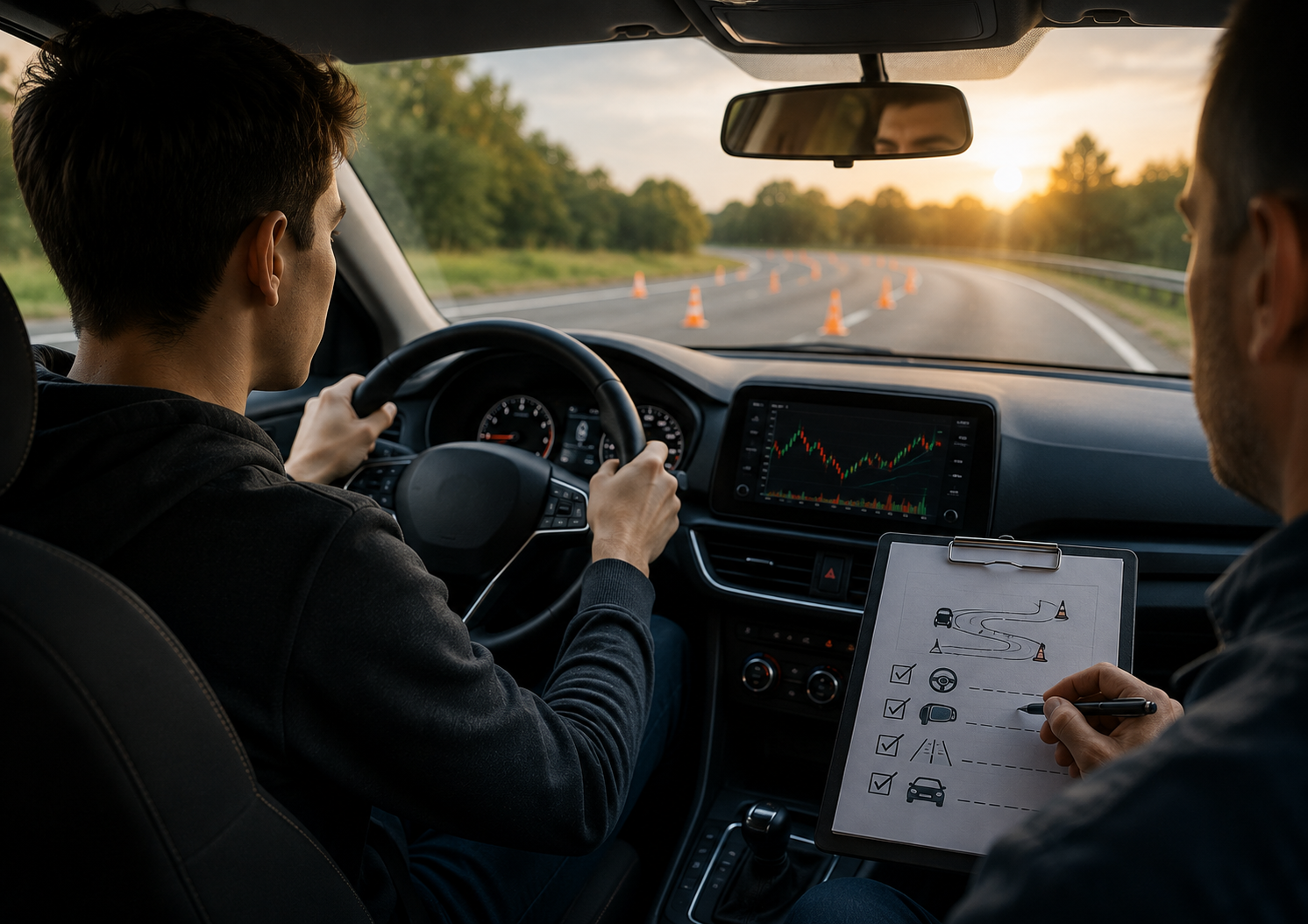
Nobody sits behind the wheel for the first time and pulls straight onto the highway during rush hour. You start in an empty parking lot, then move to a quiet street, then gradually work your way onto busier roads — and only after months of practice does it start to feel almost automatic. Trading deserves the exact same approach, yet most people jump straight onto the "highway" with real capital, without ever having circled the parking lot.
The parking lot first — a demo account isn't a wasted step
A demo account often gets dismissed as "not real," but just like a parking lot, it's exactly where you make the mistakes that would otherwise scare or bankrupt you elsewhere. This is where you learn how the platform works, how to place orders, and what it actually feels like to lose five trades in a row — without any real financial consequences.
The problem isn't the demo account itself; it's that people rush through this phase like it's a formality, instead of treating it as genuine training in the fundamentals.
Then the quiet streets — small capital, small risk
The next step in driving is a quiet, low-traffic street — real enough to create genuine tension, but still forgiving of mistakes. In trading, that's the phase of minimal real capital and minimal risk per trade, where you finally feel the emotions of real money while the consequences of a mistake stay manageable.
This is where the real learning happens — because the emotion of real, even small, money is fundamentally different from the emotion of a demo account. This is where you find out whether you actually stick to your plan, or only do so in theory.
The highway comes later, not sooner
Only after driving confidently on quiet streets do you move to busier roads — bigger position sizes, more trades, more responsibility. No experienced driver goes straight from a parking lot to a highway, because they know the speed of traffic there doesn't forgive inexperience.
The same applies to scaling up capital in trading — every increase in risk should come after proven consistency at the previous level, not simply because you felt like speeding up the process.
Reflexes only come with time behind the wheel
An experienced driver doesn't consciously think about when to shift gears or hit the brake — their body just does it, because they've repeated the motion thousands of times. An experienced trader reaches a similar state with their plan — executing it almost automatically, without an internal fight every single time.
That kind of reflex doesn't come from reading books or watching videos; it only comes from real accumulated hours "behind the wheel" — hours spent making mistakes, correcting them, and gradually growing calmer in the face of the uncertainty that's an unavoidable part of every trade.
Conclusion
Nobody judges a driver by how they handled their fifth hour behind the wheel — they're judged by years of steady driving afterward. Trading deserves the same patience: go through the parking lot, then the quiet streets, and only then press the gas. Those who skip the steps usually end up paying a much steeper price for the lesson than if they'd simply waited.