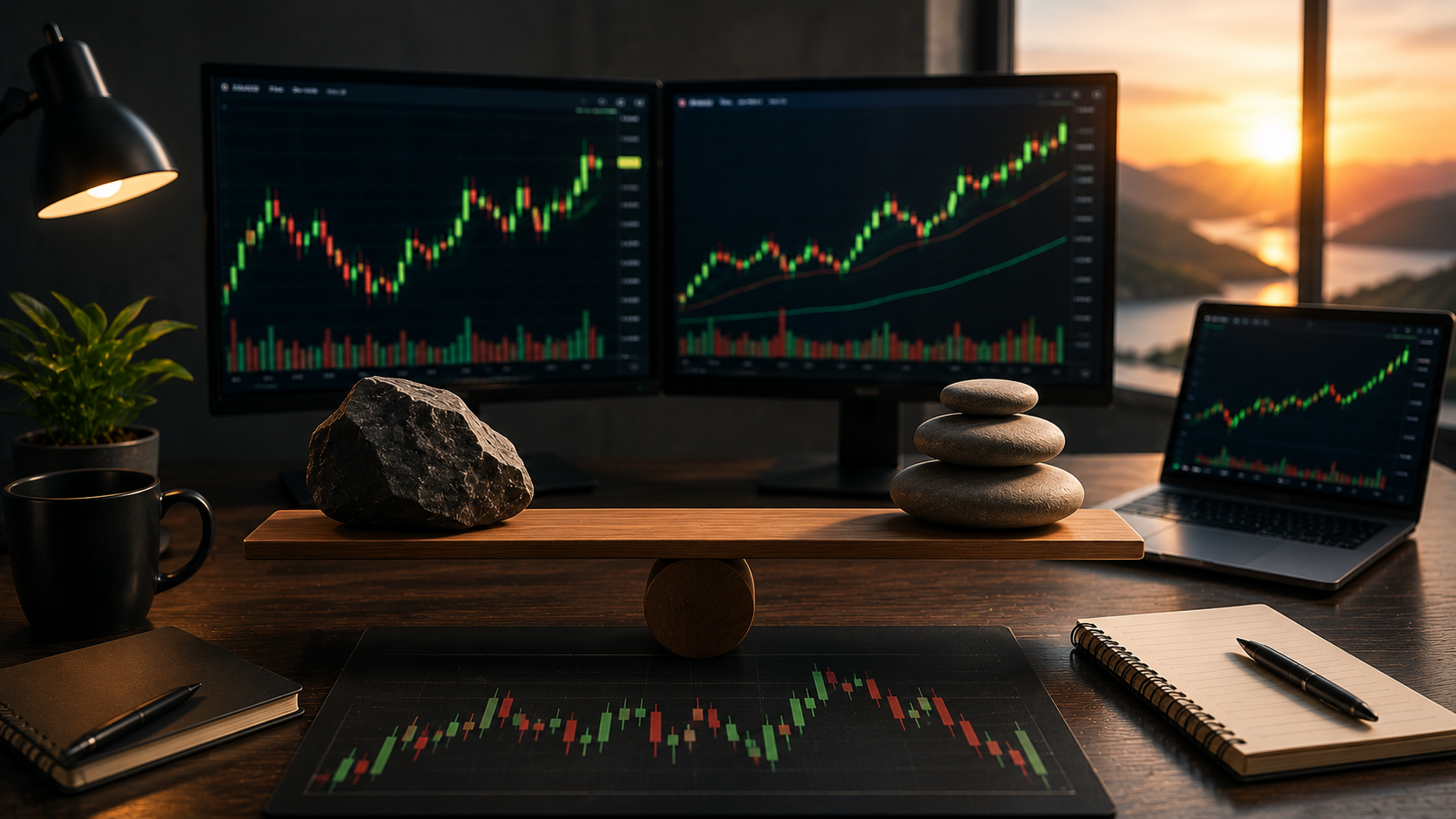
Consistency in Your Own Rules Brings as Much Success as a High-Percentage Strategy
Many traders are searching for the “perfect strategy.”
One with:
- a high win rate
- precise entries
- minimal losses
But they often miss something far more important:
👉 the way they execute it
The truth is simple:
👉 even the best strategy doesn’t work without consistency
1. What does consistency mean?
Consistency means:
- following your rules every time
- not improvising emotionally
- executing your strategy the same way
Not “sometimes.”
But always.
2. Strategy without discipline = randomness
Imagine this:
You have a strategy with a 60% win rate.
But:
- you skip some trades
- you enter outside your rules
- you exit early out of fear
👉 Your real performance is no longer 60%
It becomes:
❌ unpredictable
3. Average strategy + consistency = results
Now the opposite:
You have an “average” strategy.
But:
✔ you follow it strictly
✔ you control your risk
✔ you don’t let emotions interfere
👉 The result:
✔ stability
✔ repeatability
✔ long-term progress
4. Why most traders are not consistent
The reasons are almost always the same:
- fear of loss
- desire for quick profit
- lack of patience
- overconfidence after a win
👉 Emotions change behavior
5. The biggest difference
❌ Beginner mindset:
“Do I have a good strategy?”
✅ Advanced mindset:
“Am I executing it correctly?”
This is the difference between chaos and control.
6. How to build consistency
A few simple but powerful steps:
✔ have clear rules
✔ track your trades
✔ analyze your behavior
✔ don’t change your strategy after every loss
👉 Consistency is trained
7. The real edge
In trading, you can’t control the market.
But you can control:
👉 your actions
And that’s where your edge comes from.
Conclusion
A high-percentage strategy is useful.
But without consistency:
👉 it has no value
Consistency is what:
- turns a strategy into a system
- the system into a process
- and the process into results
👉 And that is the path to real success
This article is for educational purposes only and does not constitute financial advice. Each trader is responsible for their own decisions. Past performance does not guarantee future results.