


In a Consolidating Market, It Is Better to Wait Than to Trade Until a Breakout Happens

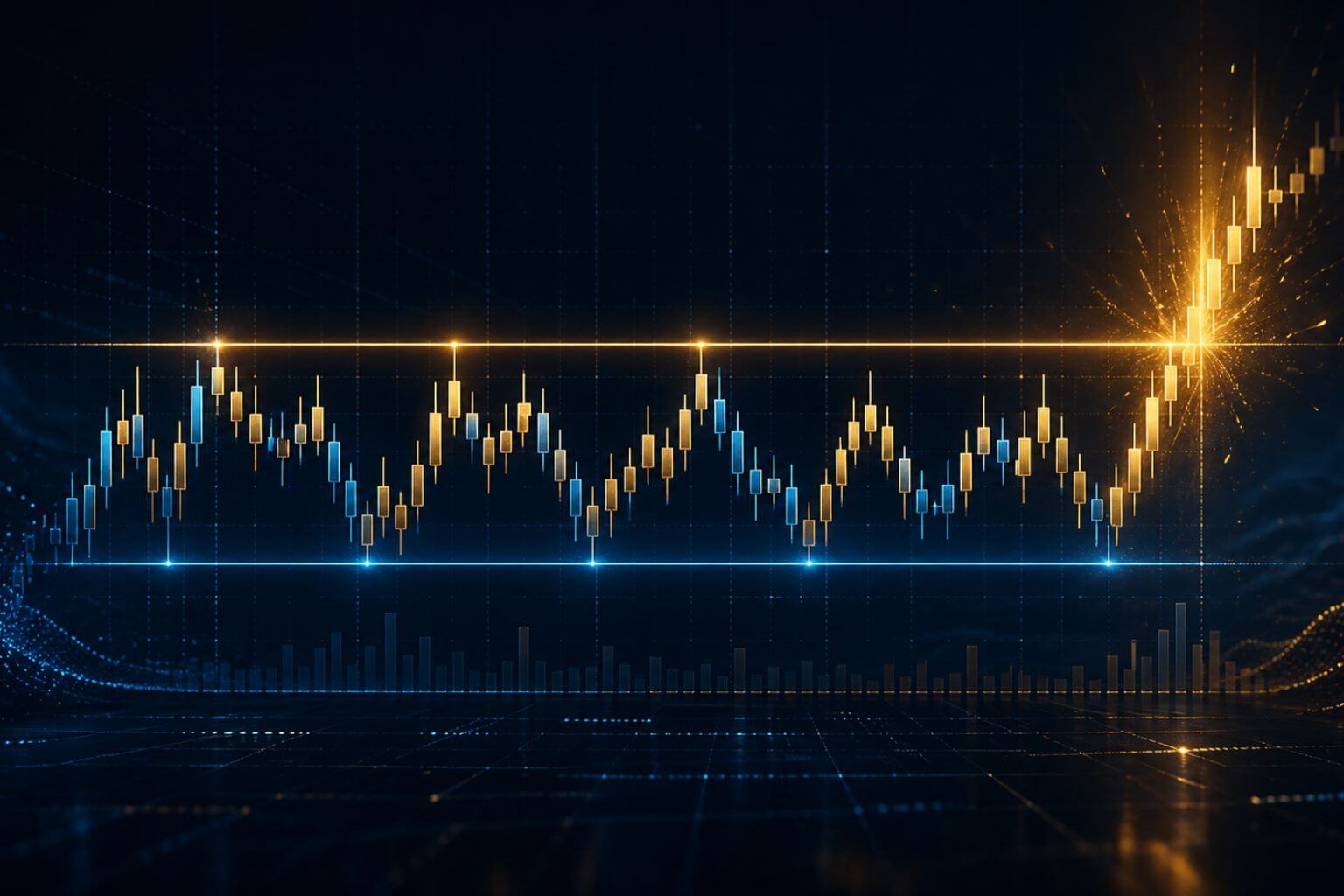
There are moments in the market when the best action is to do nothing.
That sounds strange to people who enter trading with the feeling that they always need to be active. There has to be an entry, an exit, a decision, a reaction, movement. As if pressing buttons is the only way to prove you are doing something. But this is exactly where many traders break down.
Not in the strong trend.
Not in the big crash.
But in the boredom.
In those periods when the market is going nowhere. When it moves in a range. When it goes up a little, then down a little, but in the end stays in the same place. And the longer you watch it, the more it feels like “something has to happen.”
That is exactly where the mistake begins.
Because in a consolidating market, it is often better to wait than to trade — at least until you see a real breakout.
Consolidation eats not only capital, but also your mindset
Most people think that dangerous market moments are only the strong moves. Red candles, sharp drops, sudden liquidations. Yes, those are dangerous. But consolidation carries a different kind of danger — quieter, more deceptive, and often much more exhausting.
It makes you enter without a real reason.
It makes you see setups where there are none.
It makes you want to “get something out of” a market that has not even decided where it wants to go yet.
And in the end, you do not lose only money. You lose clarity.
After a few fake moves, you start doubting everything. Your analysis. Your patience. Your system. And when the real breakout finally comes, you are often already mentally drained, stuck in a bad position, or simply out of focus.
That is one of the most underestimated problems in trading.
A consolidating market does not kill you quickly.
It wears you down.
Not every market is meant to be traded
This is something many traders accept too late.
The fact that the chart is moving does not mean there is a good opportunity. Sometimes the movement is just noise. And the tighter the range, the more fake impulses there are, and the faster price returns back into the range, the greater the chance that you are not trading a real market opportunity at all — you are just chasing randomness.
And that is the big difference between activity and quality.
Being active does not mean you are productive.
Having trades does not mean you have an edge.
Participating does not mean you are winning.
Sometimes the most professional decision is simply to admit that the market is not offering anything meaningful right now.
And leave it alone.
Why the breakout matters
A breakout is not just the moment when price moves above or below a level. A real breakout is the moment when the market stops being neutral and starts showing intention.
That is a huge difference.
As long as price keeps rotating inside the range, you have noise, hesitation, liquidity grabs, fake signals, and too many interpretations. One person sees accumulation. Another sees distribution. A third expects a trap. A fourth trades every tiny move. Everyone is looking at the same thing, but no one has confirmation.
The breakout changes that.
It does not guarantee success.
But it changes the context.
Suddenly the market is no longer sitting in indecision. Suddenly it shows that it is ready to leave the zone where it has been trapped. Suddenly there is a chance for a move that is not just internal noise, but real direction.
And that is exactly what the disciplined trader is waiting for.
Not perfect certainty.
But better context.
The biggest problem is that waiting looks like inaction
And this is where many people fail.
They cannot accept that part of the job in trading is waiting. To them, waiting feels passive. Almost embarrassing. As if you have “missed” the market if you are not in a position. As if you are not good enough if you are not trading every day.
But good trading is not about how often you participate.
It is about how carefully you choose when to participate.
Waiting is not a lack of strategy.
Waiting is a strategy.
Standing aside when there is no clear direction is a form of protection. Protection of capital. Protection of your mindset. Protection of focus. And in many cases, that is more valuable than any “heroic” trade taken only because someone could not handle watching the market without doing something.
A consolidating market tempts the ego
This is the other major trap.
When the market is in a range, many traders start feeling like they can outsmart it. Catch the bottom of the range. Then the top. Then the bottom again. Then one more small move. In theory, it sounds beautiful. In practice, this is usually what happens inside consolidation:
you enter early,
price moves a little in your direction,
then comes back,
stops you out,
then does the same in the opposite direction,
and after that returns to the middle again.
In the end, the market is not beaten. You are just tired.
Consolidation often punishes the desire to be too clever.
While breakout rewards patience.
Waiting does not mean you are unprepared
This matters too.
Not trading does not mean not watching.
It does not mean not thinking.
It does not mean you are switched off.
Quite the opposite.
This is exactly the kind of period where you can do some of the most useful work: mark your levels, observe the reactions, see where liquidity is building, monitor the volume, prepare your scenarios. In other words, you are not waiting empty-handed. You are waiting with preparation.
That is a huge difference.
The impulsive trader waits and gets irritated.
The disciplined trader waits and gets ready.
And when the move comes, the second one does not enter in panic. He already knows what he wanted to see.
Better a missed trade than drained capital
This is a rule many people learn only after paying for it.
Yes, sometimes the market will move without you. Yes, there will be moments when you wait for confirmation and part of the impulse is already gone. But that is a much smaller problem than taking ten mediocre trades inside a noisy range and wondering why nothing is working.
You do not need to catch the entire move.
You need to catch the good part of the right move.
And that is a huge psychological shift.
Once you stop trying to be everywhere, you become more accurate where it actually matters.
Real discipline shows up exactly in boring markets
Everyone looks confident when there is a trend. Everyone looks smart when the market has already moved. The real test comes before that — in the gray zone where there is no clarity, no clean movement, and no confirmed direction.
That is where you see who has a plan and who simply has the urge to participate.
That is where you see who protects capital and who trades it away for adrenaline.
And that is where another important truth becomes obvious: in trading, the winner is not the most active person, but the most selective one.
Final thoughts
In a consolidating market, the best decision is often not to look for a trade.
It is to wait for the market to show you that it is finally ready.
Until there is a breakout, many moves are just noise.
Until there is a breakout, confidence is often an illusion.
Until there is a breakout, activity can very easily turn into loss.
That is why sometimes the strongest position is not long, not short, but patience.
And yes, that does not sound very exciting.
But very often, that is exactly what keeps a trader alive long enough to be in the right place when the real move finally begins.