


Why Beginner Traders Today Have an Edge Over “Experienced” Ones

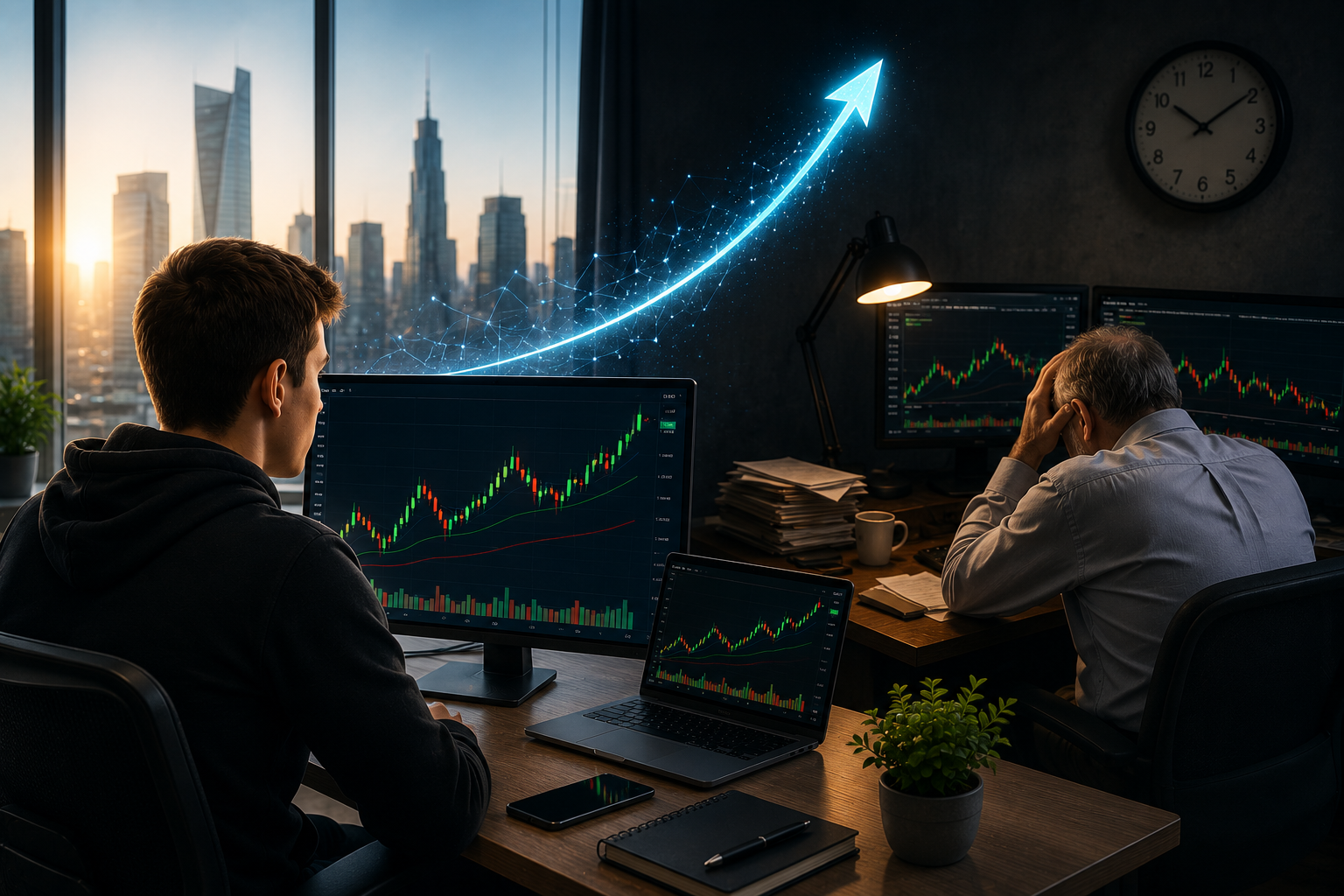
It sounds counterintuitive, doesn’t it? How could someone taking their first steps in trading today possibly have an advantage over someone who’s been trading for 10 or 15 years?
Here’s the thing: in trading, experience doesn’t work the way it does in most other fields. In medicine, construction, or law, years of practice almost always translate into accumulated wisdom. Trading is different — and after more than 12 years in this industry, first as a broker and later as someone who has trained hundreds of people to trade, I can say this with confidence.
Let’s break down why.
Experience in Trading Often Means Accumulated Bad Habits
When someone trades for years without a structured strategy, they don’t build expertise — they build reflexes. And the problem is, most of those reflexes are built on top of mistakes.
Here’s what typically happens to an “experienced” trader without a system:
- Emotional trading turned into habit. Entering a trade out of fear of missing a move (FOMO), holding a losing position hoping it will “come back,” closing a winning trade too early out of fear the profit will vanish. After years, these reactions become automatic — and far harder to unlearn than if the person had never developed them in the first place.
- A patchwork of contradictory methods. The self-taught experienced trader has usually tried dozens of indicators, forum strategies, “signals” from social media groups. The result isn’t expertise — it’s a confused mix of approaches that contradict each other.
- Overconfidence after a lucky streak. A few wins made on gut feeling can convince someone they’ve “figured out the market.” This is one of the most dangerous traps in trading, because the market eventually proves otherwise — usually at a steep cost.
Beginners have none of this baggage. They start with a blank slate. And that’s a real advantage, if used correctly.
The Technological Edge of the 2020s
Fifteen or twenty years ago, getting access to quality market analysis meant either paying heavily for a terminal like Bloomberg or relying on brokers whose interests didn’t always align with yours.
Today’s beginner trader has access to:
- Platforms like TradingView, with indicators, backtesting, and communities that simply didn’t exist in an accessible form for the average person 20 years ago.
- Automated and semi-automated indicators, built on clear logic, that remove much of the subjectivity from decision-making — something older generations of traders had to handle manually, “by eye.”
- Unlimited demo accounts, allowing strategy testing under real market conditions without risking actual capital — a luxury that wasn’t always this accessible.
- Communities and educational channels where strategies are demonstrated in real time, rather than sold as a “magic formula” with no proof behind them.
In other words, the tools available for free or cheap to today’s beginner used to be reserved for institutions.
Information Overload Is an Advantage — If You Know How to Filter It
Yes, the internet is full of noise, fake “gurus,” and promises of quick riches. But that’s exactly where the difference lies between having information and having the right information.
Today’s beginner trader isn’t forced to experiment blindly for years until they stumble onto what works. They can:
- Learn from already-tested and clearly explained strategies instead of reinventing the wheel.
- Watch a strategy applied live, step by step, before risking their own money.
- Ask questions in a community of people who went through the exact same starting point.
That’s precisely why at Tradocademy we took a different approach — instead of selling signals (which teach nothing), we openly show, in our free Telegram group, how the strategy is applied in real time, including the results. The goal isn’t for anyone to copy trades — it’s for them to understand the logic behind them.
The Psychological Edge of a “Blank Slate”
Perhaps the most underrated advantage a beginner has is psychological. They don’t yet carry the scars of years of bad trading. They haven’t built up distrust toward strategies because yet another “magic system” let them down.
That means when they learn the right approach from day one — with clear risk management rules, realistic expectations, and an understanding of why the strategy works rather than blind faith that it does — they build discipline directly on solid ground, without first having to unlearn bad habits.
That’s exactly why the strategy we developed and explain in our free book was built specifically for people starting from zero. Its results — a success rate of over 89% across more than 100 real trades — don’t come from complexity, but from the opposite: simplicity and discipline, which are far easier to absorb for someone without layers of bad habits to strip away first.
How Beginners Can Turn This Advantage Into Results
The advantage alone isn’t enough — it has to be used correctly. Here’s how:
- Start with education, not money. Before you risk a single dollar, understand the logic behind a strategy. If you can’t explain in simple terms why you’re entering a trade, you’re not ready to do it with real capital yet.
- Test on a demo account long enough. Not for a week — long enough to see how the strategy behaves across different market conditions.
- Avoid signals, seek understanding. Anyone who tells you “buy here, sell there” without explanation is making you dependent on them — not turning you into a trader.
- Risk management matters more than a “winning strategy.” Even with a good strategy, without risk control, you’ll eventually lose. This is the first thing every beginner needs to master.
- Treat losses as part of the process, not as failure. Even a strategy with an 89% success rate has losing trades. What matters is the math over the long run, not any single trade.
Final Thoughts
Experience in trading isn’t a guarantee of success — sometimes it’s quite the opposite. A beginner who approaches trading with the right education, discipline, and tools genuinely starts from a stronger position than many “veterans” carrying years of bad habits.
If you’re just starting out and want to see what a genuinely working strategy looks like in practice, our free book breaks down the entire logic step by step, and our Telegram group lets you watch it applied live — no signals, purely educational.