


With the Right Strategy, Anyone Can Become a Trader

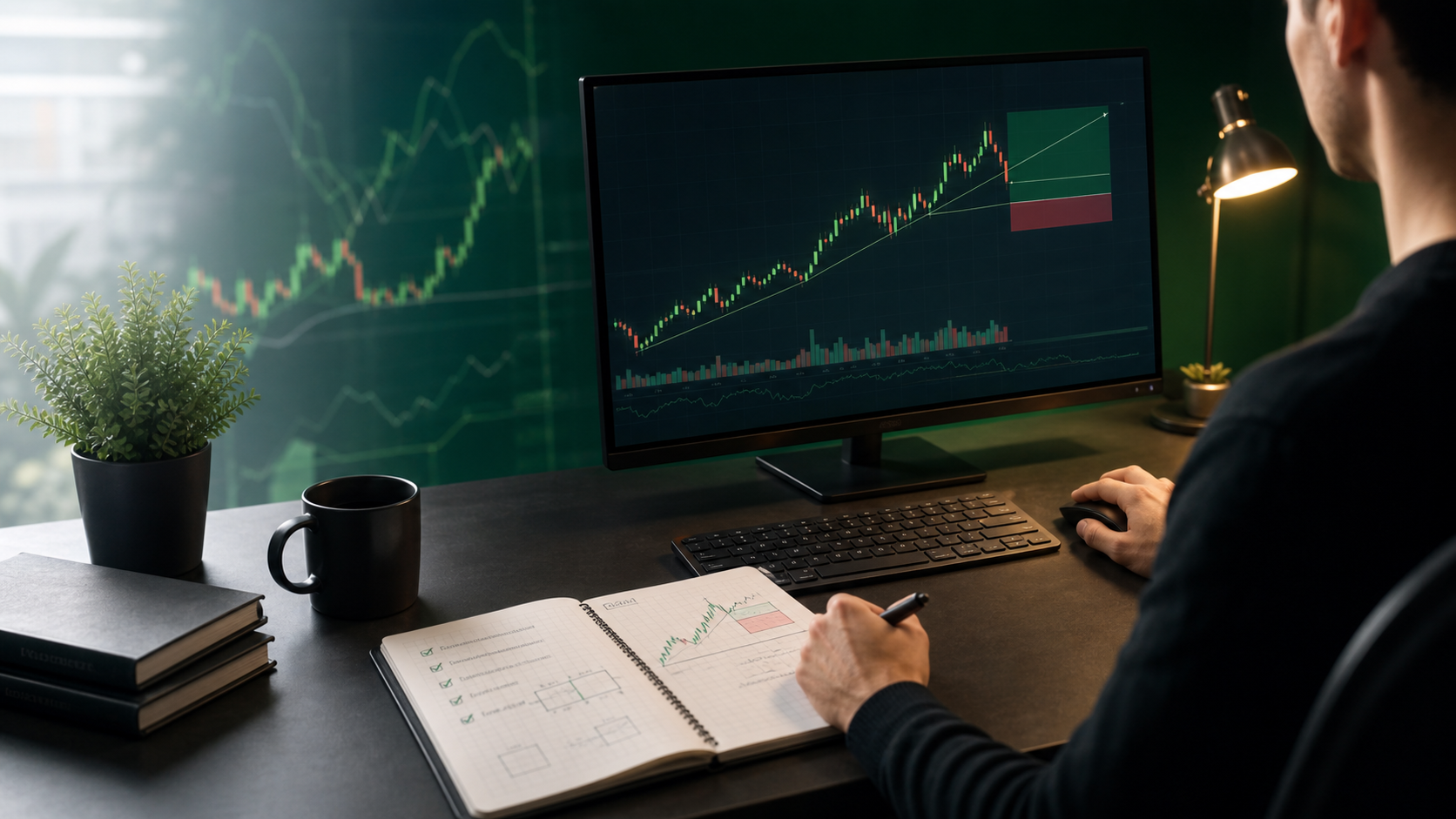
Many people see trading as something complicated, reserved only for people with years of experience, special education, or large capital. The truth is different.
Trading is not a skill people are born with. It is a process that can be learned when there is a clear strategy, defined rules, and discipline in execution.
Most beginners start with the wrong question: "Where will price go?" A better question is: "What is my plan if the market does one thing or another?"
1. Strategy Is the Foundation
Without strategy, trading quickly becomes random button-clicking. One setup looks good, the next one looks even better, and after a few losses, decisions start coming from emotion instead of analysis.
A good strategy creates structure. It answers important questions:
when there is a valid opportunity to enter;
where the idea becomes invalid;
how much risk is being taken;
where the logical target is;
what to do if price does not move immediately in the expected direction.
When these rules are clear in advance, the trader does not need to make emotional decisions under pressure.
2. Anyone Can Learn, but Not Everyone Follows the Process
Being a trader does not mean winning every trade. That is impossible.
Being a trader means working with probabilities. Sometimes a correct trade ends in a loss. Sometimes a poor trade ends in profit by chance. That is why one result is not enough to judge whether the approach is good.
What matters is whether decisions are made through a system.
When a person follows a strategy, manages risk, and reviews results, the market gradually becomes clearer. That is when trading stops feeling like luck and starts becoming a professional process.
3. Risk Matters More Than the Entry
Many beginners spend most of their time searching for the perfect entry. They watch indicators, patterns, news, and signals, but miss the most important question: how much can they lose if the idea fails?
A professional approach starts with risk.
Before entering a trade, the trader should know:
how much capital is at risk;
where the stop loss is;
whether the potential reward justifies the risk;
whether there is a strong enough reason to take the trade.
When risk is controlled, one losing trade does not destroy the account. It is simply part of the statistics.
4. Strategy Removes the Need to Guess
Trading is not guessing. Nobody knows with certainty what the market will do.
A strategy does not promise certainty. It gives structure for acting under uncertainty.
For example, if price reaches a support zone and shows a reaction, the strategy may create a condition for entry. If price breaks the zone without showing strength to recover, the strategy may say there is no trade. In both cases, the decision comes from rules, not feelings.
That is the difference between a beginner and a developing trader. The beginner asks what will happen. The developing trader knows what they will do under different scenarios.
5. Discipline Turns Strategy Into Results
Even the best strategy has no value if it is not followed consistently.
Many traders change their system after a few losses. Others increase risk because they want to recover quickly. Some enter trades outside the rules because they are afraid of missing a move.
This is where discipline matters most.
A strategy must be tested, tracked, and followed long enough to show real results. Without consistency, there is no data. Without data, there is no objectivity.
6. Conclusion
With the right strategy, anyone can start thinking and acting like a trader.
That does not mean the process is easy or that profits come immediately. It means trading can be learned when there is structure, risk management, and discipline.
The market will always be uncertain. The difference is that a trader with a strategy does not try to control the market. They control their own decisions.